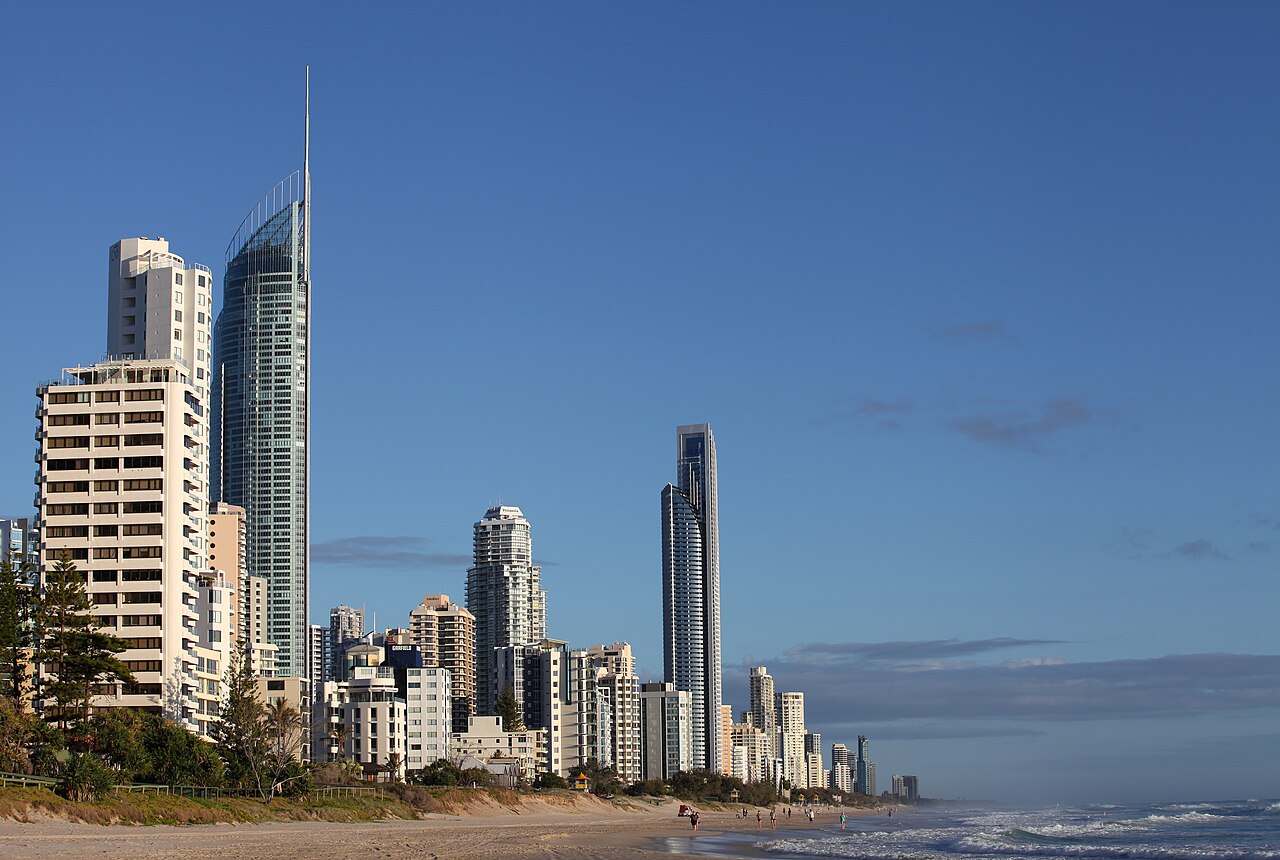
Gold Coast as a road trip for beaches and hinterland
Published 9 October 2026 · HolidayWow editors · Written with AI, numbers checked against our data ·
A Gold Coast road trip works well when you pair easy coastal driving with time inland. Use the city as your main base, then explore the hinterland from a second stay. This approach gives you beach mornings, convenient restaurants and a clear route through the Gold Coast hinterland.
In the Gold Coast, every month is a good time to travel, with daytime highs from 20 °C to 30 °C and the sea up to 27 °C.
7 days in Gold Coast in October, Beach and hiking, from Sydney on your own
Plan a trip- Best time to go
- All year
- Sea in February
- 27 °C
- Swim season, sea from 21 °C
- All year
- Flight from Sydney, nonstop
- about 1 h 24


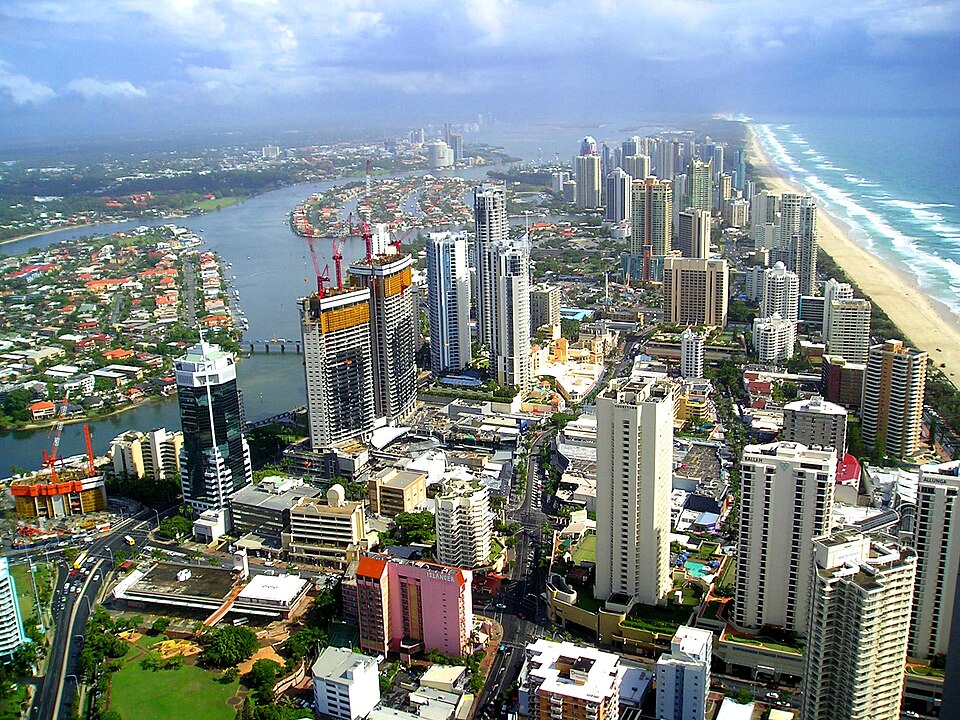
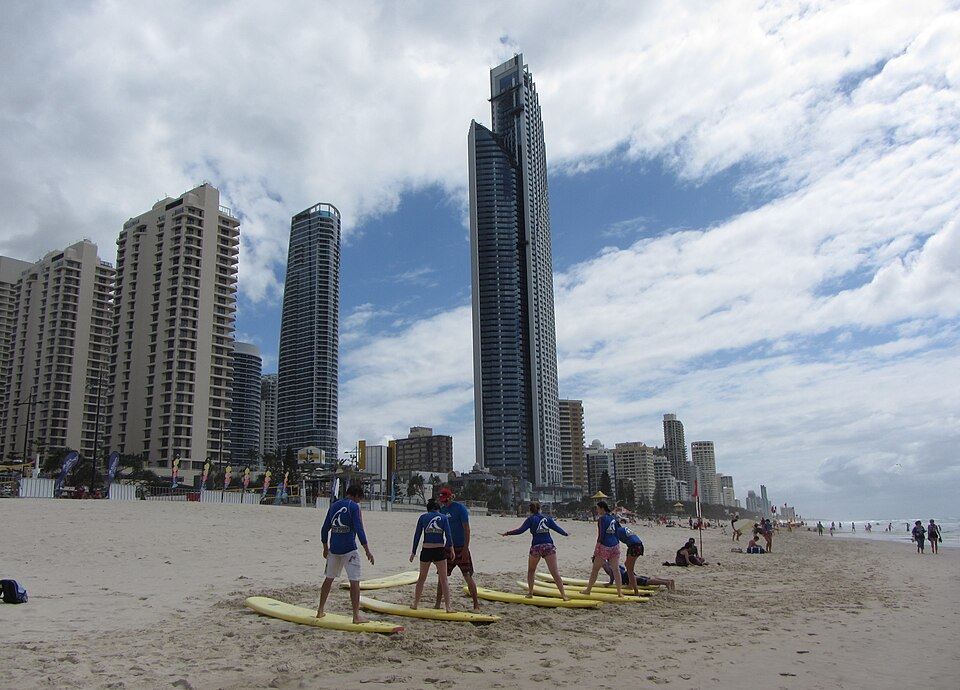 iPhoto: Telluride749 · CC BY-SA 4.0 · Wikimedia Commons
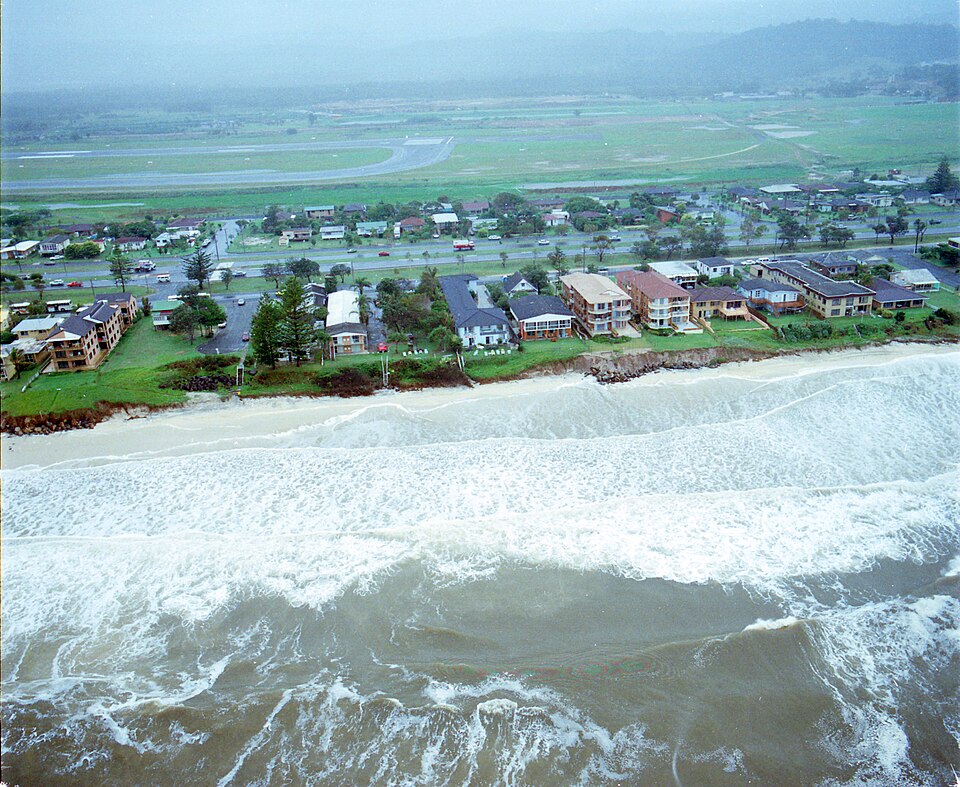 iPhoto: Queensland State Archives · Public domain · Wikimedia Commons
Gold Coast at a glance
- What’s the vibe?
- The Gold Coast suits a road trip because the coast and hinterland offer contrasting experiences within one compact region. You can stay near Surfers for beach access and city dining, then drive inland for rainforest scenery, lookout points, village streets and cooler conditions.
- Best time to go
- Daytime highs range from 20 °C in June to 30 °C in January. Rain is rarest in August (5 days) and most frequent in March (18 days).
- How to get there?
- From Sydney, you can be in the Gold Coast in about 1 h 24.
Why a Gold Coast road trip works well
The Gold Coast suits a road trip because the coast and hinterland offer contrasting experiences within one compact region. You can stay near Surfers for beach access and city dining, then drive inland for rainforest scenery, lookout points, village streets and cooler conditions. Keeping the bases simple makes the journey easy to manage.

A coastal route is particularly effective for couples, families and small groups who want freedom around each day. The Pacific Motorway connects the urban Gold Coast with hinterland gateways, while local roads take you towards places such as Tamborine Mountain, Springbrook and Byron Bay. Set each day around one main experience rather than adding distant stops.
Your travel pace matters more than mileage. A relaxed road trip can hold one stop in the morning and another later in the day, while a balanced plan gives you room for a beach walk, a lookout and dinner. HolidayWow reads your preferred pace from a written or spoken description and places each stop on the map.
Choose a coastal base and a hinterland stay
Surfers provides a practical first base. The beach, central dining and city attractions sit close together, making it easy to begin each morning outdoors and return for dinner. A stay in this central area also gives drivers convenient access to the motorway when the second part of the holiday begins.
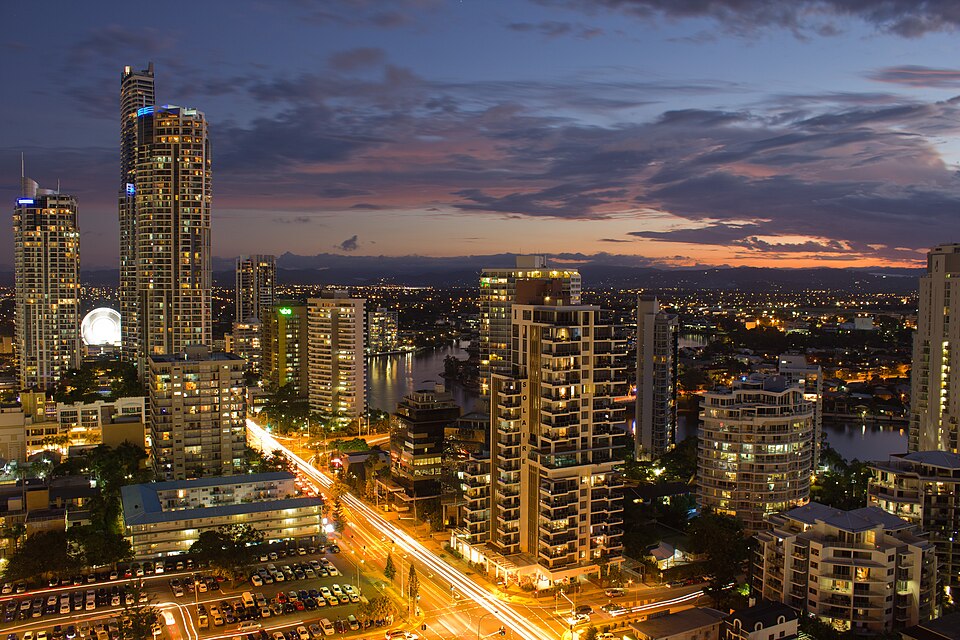 iPhoto: marty.vdh · CC BY-SA 2.0 · Wikimedia Commons
For a change of scenery, stay near a hinterland town such as Tamborine Mountain or Springbrook. These locations work well for couples who want slower mornings and walking access to local nature. Check the walking difficulty, mobile reception and daily needs before choosing a property in a smaller settlement.
A two-base arrangement gives you variety without making the road trip feel hurried. Use the coastal stay for entertainment, shops and beach time, then move the vehicle to the hinterland and build days around walks, gardens, viewpoints and relaxed dining. Keep the changeover day light so everyone can settle into the second base.
iPhoto: marty.vdh · CC BY-SA 2.0 · Wikimedia Commons
Plan beach days and inland journeys
Summer suits a road trip centred on swimming, early walks and long days beside the ocean. January brings a daytime temperature of 30 °C and a sea temperature of 26 °C, so beach stops can shape the day. February is similarly warm, with 29 °C by day and a sea temperature of 27 °C for comfortable ocean plans.
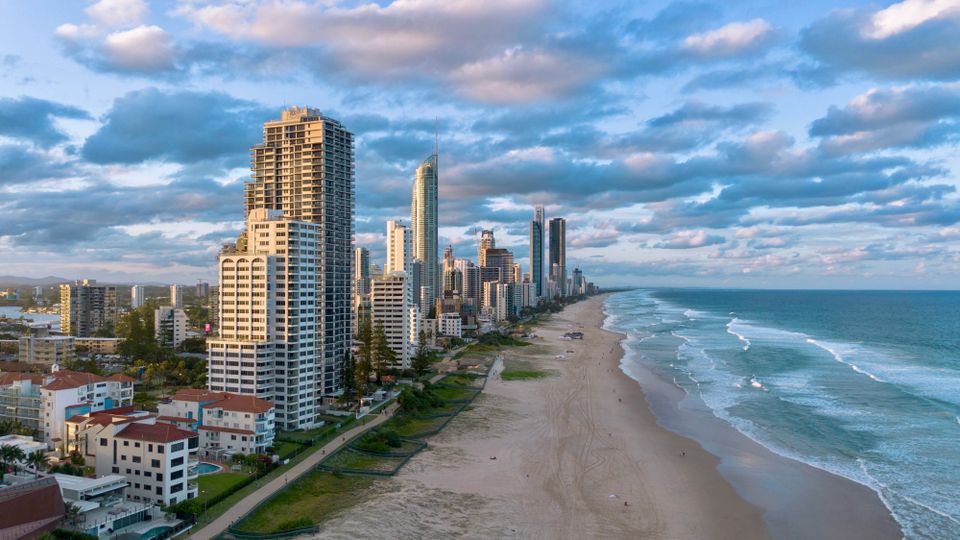
Autumn and winter suit mixed beach and hinterland itineraries. March has a daytime temperature of 27 °C, while April reaches 25 °C with cooler evenings at 17 °C. From May into winter, the hinterland becomes appealing for daytime outings, with May nights at 14 °C, June nights at 11 °C and July nights at 10 °C.
Build each day around one destination region. A coastal day can include a beach walk, a meal and a short scenic drive. A hinterland day can combine a lookout, a walk and a village lunch. HolidayWow places the stops, connects each day as a route and lets you move a stop to another date whenever the plan needs adjusting.
The right months for this trip
Road trips run best in August, January, February and March; August has the fewest rain days. Take August: 22 °C by day and 5 days of rain.
Already started
Your trip in the Gold Coast
 27 °C by day in October
- Sea 23 °C
- from Sydney about 1 h 24
Day 1
Arrival in Gold Coast
Flight from Sydney in 1 h 24, direct. Settle in, first evening by the harbour or in the centre.
Day 2
Greenmount Beach
Beach day: the sea is around 23 °C in October.
Day 3
Duranbah Beach
Beach day: the sea is around 23 °C in October.
Day 4
Bilinga Beach
Beach day: the sea is around 23 °C in October.
Day 5
Tugun Beach
Beach day: the sea is around 23 °C in October.
Day 6
Currumbin Beach
Beach day: the sea is around 23 °C in October.
Day 7
Last morning and flight home
One last coffee with a sea view, then back to Sydney.
Look around without an account; sign in to save.
Weather and sea temperature in the Gold Coast
The warmest month is January, with 30 °C by day and 21 °C at night. The sea reaches 27 °C in February. The sunniest month is September, with 8 hours of sun a day.
| Month | Jan | Feb | Mar | Apr | May | Jun | Jul | Aug | Sept | Oct | Nov | Dec |
|---|---|---|---|---|---|---|---|---|---|---|---|---|
| Day °C | 30 | 29 | 27 | 25 | 23 | 20 | 20 | 22 | 24 | 27 | 28 | 29 |
| Night °C | 21 | 21 | 20 | 17 | 14 | 11 | 10 | 11 | 14 | 16 | 19 | 20 |
| Sea °C | 26 | 27 | 26 | 25 | 24 | 23 | 22 | 21 | 22 | 23 | 24 | 25 |
| Sun h/day | 8 | 7 | 7 | 7 | 7 | 6 | 7 | 8 | 8 | 8 | 8 | 8 |
| Rain days | 15 | 16 | 18 | 12 | 11 | 9 | 7 | 5 | 7 | 10 | 12 | 16 |
Weather in the Gold Coast month by month
- January30 °C26 °C
- February29 °C27 °C
- March27 °C26 °C
- April25 °C25 °C
- May23 °C24 °C
- June20 °C23 °C
- July20 °C22 °C
- August22 °C21 °C
- September24 °C22 °C
- October27 °C23 °C
- November28 °C24 °C
- December29 °C25 °C
The Gold Coast climate in numbers
Daytime highs range from 20 °C in June to 30 °C in January. Rain is rarest in August (5 days) and most frequent in March (18 days). The sunniest month is January with 8 hours a day.
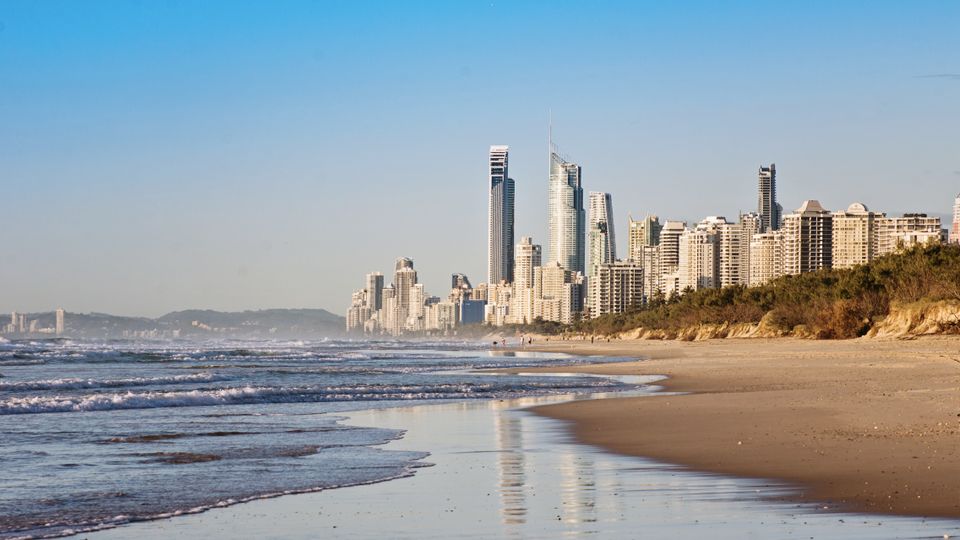
The sea is warm enough for proper swimming in January, February, March, April, May, June, October, November and December, peaking at 27 °C in February. For walking and sightseeing in pleasant warmth, aim for January, February, March, April, May, June, July, August, September, October, November and December.
- January: 30 °C, sea 26 °C, 15 rain days, 8 h of sun
- February: 29 °C, sea 27 °C, 16 rain days, 7 h of sun
- March: 27 °C, sea 26 °C, 18 rain days, 7 h of sun
- April: 25 °C, sea 25 °C, 12 rain days, 7 h of sun
- May: 23 °C, sea 24 °C, 11 rain days, 7 h of sun
- June: 20 °C, sea 23 °C, 9 rain days, 6 h of sun
- July: 20 °C, sea 22 °C, 7 rain days, 7 h of sun
- August: 22 °C, sea 21 °C, 5 rain days, 8 h of sun
- September: 24 °C, sea 22 °C, 7 rain days, 8 h of sun
- October: 27 °C, sea 23 °C, 10 rain days, 8 h of sun
- November: 28 °C, sea 24 °C, 12 rain days, 8 h of sun
- December: 29 °C, sea 25 °C, 16 rain days, 8 h of sun
Demand for Gold Coast through the year
Search interest for Gold Coast peaks in January and is lowest in June, based on monthly search volumes.
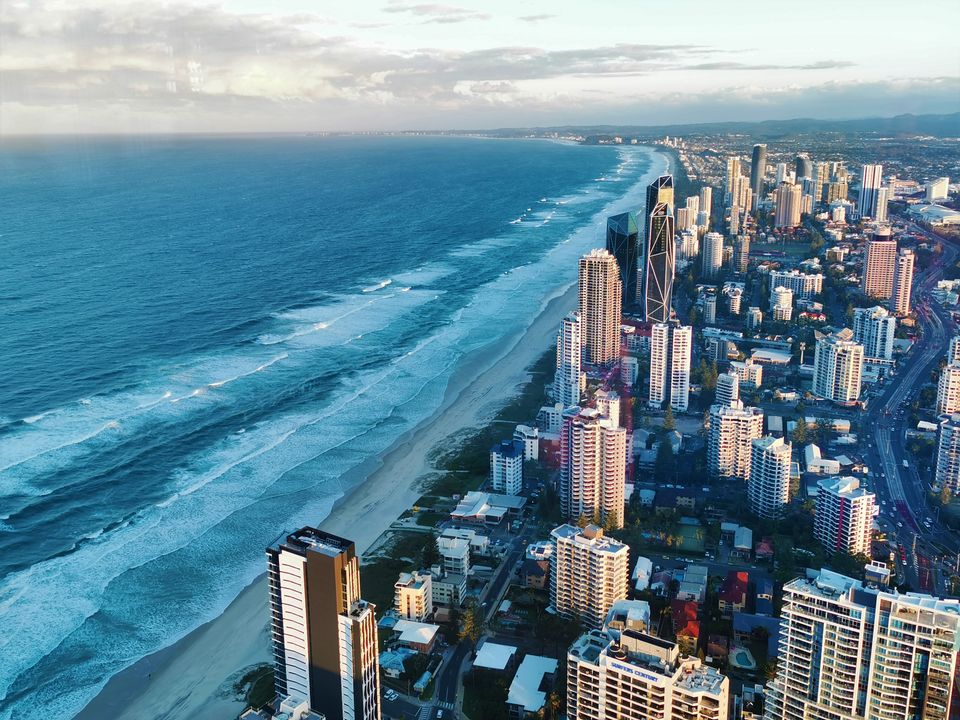
How to shape a January day in Gold Coast
Start early, while the air is still fresh, with the sights that need walking. Midday at 30 °C calls for a slow lunch and a swim. Evenings drop to 21 °C, so plan dinner outside and keep a layer handy.
Getting to Gold Coast from home
From Sydney, Gold Coast is {{dist.home:SYD}} away as the crow flies. From Melbourne it is {{dist.home:MEL}}. Brisbane lies {{dist.home:BNE}} away.

Door to door, the plan lines up the ride to the airport, the flight with live fares and the transfer on arrival.
Getting there
The quickest way is from Sydney: you're in the Gold Coast in about 1 h 24 on a direct flight. Direct flights leave from 5 Australian airports. The nearest airport is Gold Coast Airport (OOL), 20 km away.
- OOLGold Coast Airport20 km to the destination
- BNEBrisbane International Airport76 km to the destination
| From | Flight time | To | Direct flight |
|---|---|---|---|
| Sydney SYD | about 1 h 24 | OOL | Direct |
| Canberra CBR | about 1 h 39 | OOL | Direct |
| Melbourne MEL | about 2 h 08 | OOL | Direct |
| Adelaide ADL | about 2 h 27 | OOL | Direct |
| Perth PER | about 4 h 43 | BNE | Direct |
Flight times estimated from the distance, direct routes from OpenTravelData.
Packing for Gold Coast in January
With 30 °C by day and 21 °C at night and 15 rain days in January, pack for heat. Your plan builds this list for you and updates it when you change the dates.
- Light, breathable clothes for the day
- Sun hat and sunscreen
- A refillable water bottle
- A warm layer for the evenings
- A packable rain jacket or umbrella
- Swimwear and a beach towel
- Comfortable walking shoes
- A travel adapter for your chargers
Prices for Gold Coast
Stays, tours and flights for Gold Coast show their live price from our partners, in your currency, right below. We never estimate a price: what you see is what the partner charges today.
A seven day Gold Coast road trip outline
Begin with two days based near Surfers. Use the first day for the beach and a gentle coastal drive, then give the second day time for the central Gold Coast, shopping and dining. This opening also gives drivers time to become familiar with the motorway and local traffic patterns.
Spend the third day travelling inland and check into your hinterland base. Keep the afternoon light with a walk, a garden or a nearby lookout. Use the fourth and fifth days for separate hinterland outings, giving each day its own centre and avoiding the need to rush between widely separated stops.
Return to the coast for the sixth day and stay near the beach again. Reserve the final day for a relaxed breakfast, any nearby activities you missed and a flexible return. For a shorter trip, use the first three days for the coast, one changeover day and one full hinterland day.
Driving, booking and sharing your plan
Plan arrival according to your starting city and connect the drive with the first accommodation. Gold Coast is 76 km from Brisbane and 692 km from Sydney. Melbourne, Canberra, Adelaide and Perth sit at 1,337 km, 903 km, 1,604 km and 3,614 km respectively.

Choose accommodation around where you will actually spend each evening rather than the first attractive listing you find. The Gold Coast base benefits from convenient access to the motorway, while a smaller hinterland base should suit your walking plans and dining preferences. Partner links in HolidayWow show live prices and current availability.
Share the route with drivers and fellow travellers through one plan link. Viewers can follow the daily stops, editors can suggest changes and group members can vote or comment. The plan can also include live partner options, a budget, a packing list and document storage, keeping the road trip organised from booking to arrival.
Gold Coast: frequently asked questions
How many days should I allow for a Gold Coast road trip?
Allow seven days for a balanced road trip with time in Surfers and a stay in the hinterland. Three days work well for a short coastal break with one inland outing. HolidayWow adjusts daily stops to your dates, group and preferred pace, keeping each day aligned with the bases you choose.
What is the best time for a Gold Coast road trip?
The warm months suit beach-led travel, while cooler months work well for hinterland walks and relaxed coastal outings. January and February favour ocean days. May through July adds stronger appeal for inland scenery and village stays. The generated climate guide helps you compare conditions for the exact dates you choose.
Should I stay in Surfers or the hinterland?
Stay in Surfers for beaches, dining and convenient access to the motorway. Choose Tamborine Mountain or Springbrook for walking, gardens and a quieter change of scenery. A two-base trip offers both experiences while keeping each daily route straightforward and easy for the whole group.
Can I change Gold Coast road trip stops after planning?
Yes. HolidayWow lets you drag a stop to another day, swap a place or make the daily pace lighter. The plan checker reorders the day after each edit, keeping the route sensible. You can also set a relaxed, balanced or packed pace for the entire trip or apply it to individual days.
Does the road trip planner work for a group?
The planner supports groups through a shared link, editing roles, voting and comments. You can divide the trip budget, track group decisions and keep bookings with the relevant days. The free app also accepts typed or spoken trip ideas, which makes it straightforward for several travellers to start together.


Plan your holiday in the Gold Coast

Describe your trip in one sentence. When, who with and what matters to you.